
Grounded Together: Inside MTS’s new Reflection Space
A meeting room at The Society has been transformed into a welcoming space where relationships can be nurtured, knowledge can be shared, healing can occur and members can come together in a good way.
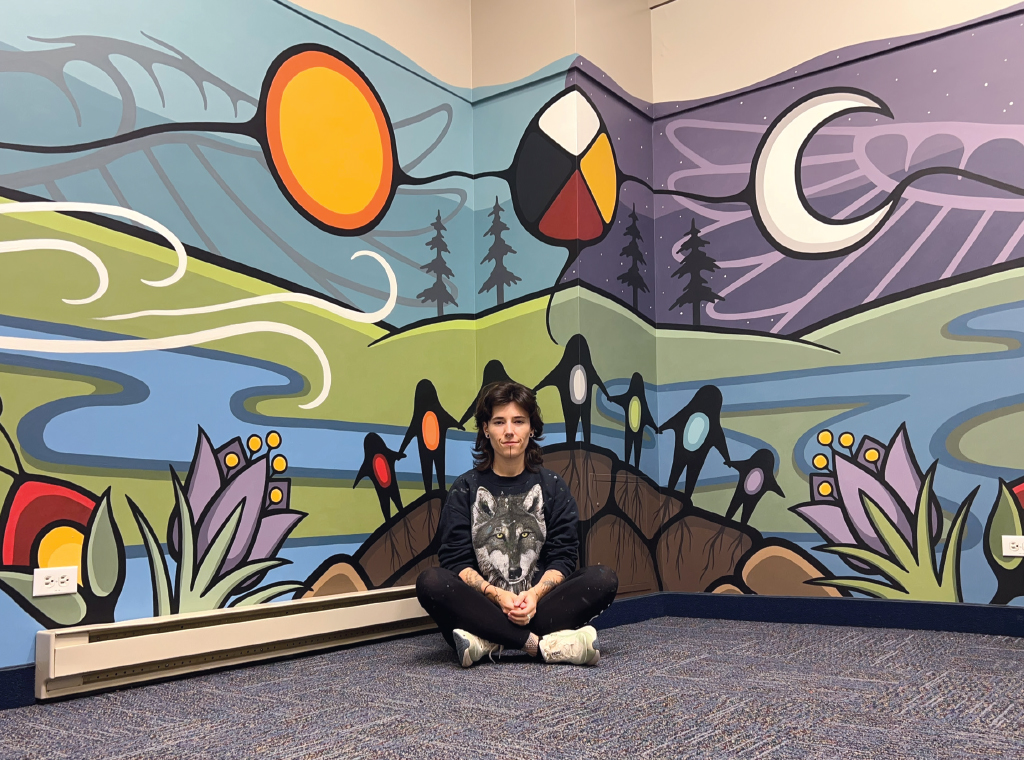
The calming reflection space, which is in Room C on the main floor of McMaster House, features a new mural by Indigenous tattoo and mural artist Justine Proulx, created to help transform the room into a place of belonging, reflection, ceremony and learning.
“I wanted to do something that was one, peaceful and nice to look at, but also something that had a bit of a teaching element to it,” said Proulx, whose Métis identity is rooted in Ojibwe and Cree ancestry.
Grounded in the lands and waters of Manitoba, the mural, entitled “Grounded Together,” honours Indigenous ways of knowing and invites those who enter the room to pause, reflect, and reconnect. The mural features the four sacred medicines, a medicine wheel, Turtle Island, wheat and prairie imagery, and floral patterns inspired by Indigenous and Métis beadwork. The Red and Assiniboine rivers can be spotted flowing through the background.
The animals within the mural also offer teachings to carry into our daily lives. The eagle reminds us to lead with love, the turtle teaches us truth, and the owl offers wisdom and discernment.
The vision behind this space and mural was developed by the Circle of Indigenous Educators, Elders, and Knowledge Keepers, who help guide The Society’s work. The room also provides a welcoming space where smudging can take place.
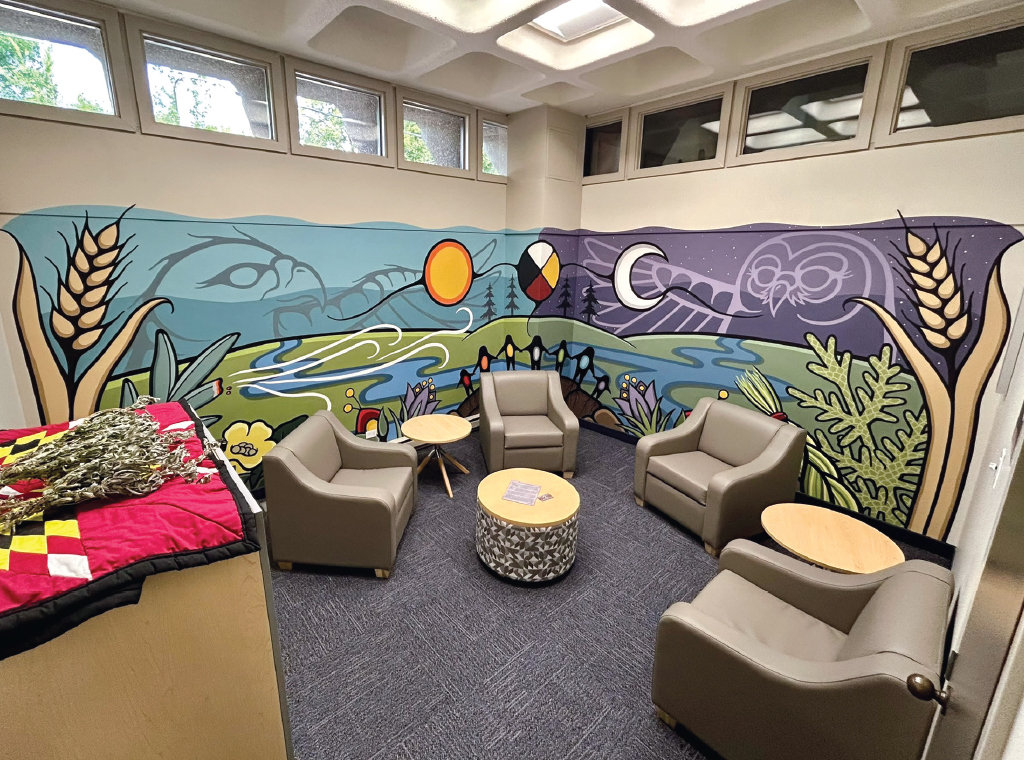
Grounded in the lands and waters of Manitoba, this mural honours Indigenous ways of knowing and invites those who enter to pause, reflect, and reconnect.
Proulx has created dozens of murals and installations across Winnipeg, including in elementary and high schools, hospitals, community and youth centres, as well as large public art projects. For Proulx, creating murals is much more than painting walls, it is ceremony, storytelling, and relationship-building.
“These works invite people to pause, reflect, and remember that we are all part of something larger than ourselves, bound together by the land and the teachings it carries.”
Art can also create opportunities for connection and learning, Proulx added. Through her work in schools, she encourages students to explore creativity, different perspectives and Indigenous art and teachings.
“Art is a universal language,” Proulx said. “It can bridge gaps where language sometimes can’t.”
Proulx encourages educators to give students the freedom to create, explore different mediums and think beyond traditional art. Whether through a guest artist, hands-on activity or incorporating creativity into another subject, Proulx says giving students minimal criteria and room to find their own approach can lead to some surprising results.
“Kids are always surprising us with how much more they can do. They always exceed our expectations.”
At The Society, the room now offers members a space to pause, reflect and recharge surrounded by artwork that honours Indigenous ways of knowing and invites connection with one another and the land.
The hope is that the space will remind everyone who enters that learning begins with listening, relationships and respect for one another and for the land.
Explore more of Justine Proulx’s work here.