
All Aboard the Bike Bus
At a growing number of Winnipeg schools, the day begins on two wheels. Dozens of students, teachers and community volunteers gather at designated stops before setting off together on a colourful bike bus that is transforming the trip to school into something much bigger. Along the way, they are building confidence, embracing active transportation and creating stronger, more connected school communities.
A bike bus operates much like a traditional school bus, except that everyone travels to school by bicycle. An adult leads the group along a planned route, picking up riders at designated stops. Participants travel together as a single unit through intersections, following group riding practices designed to maximize visibility and safety.
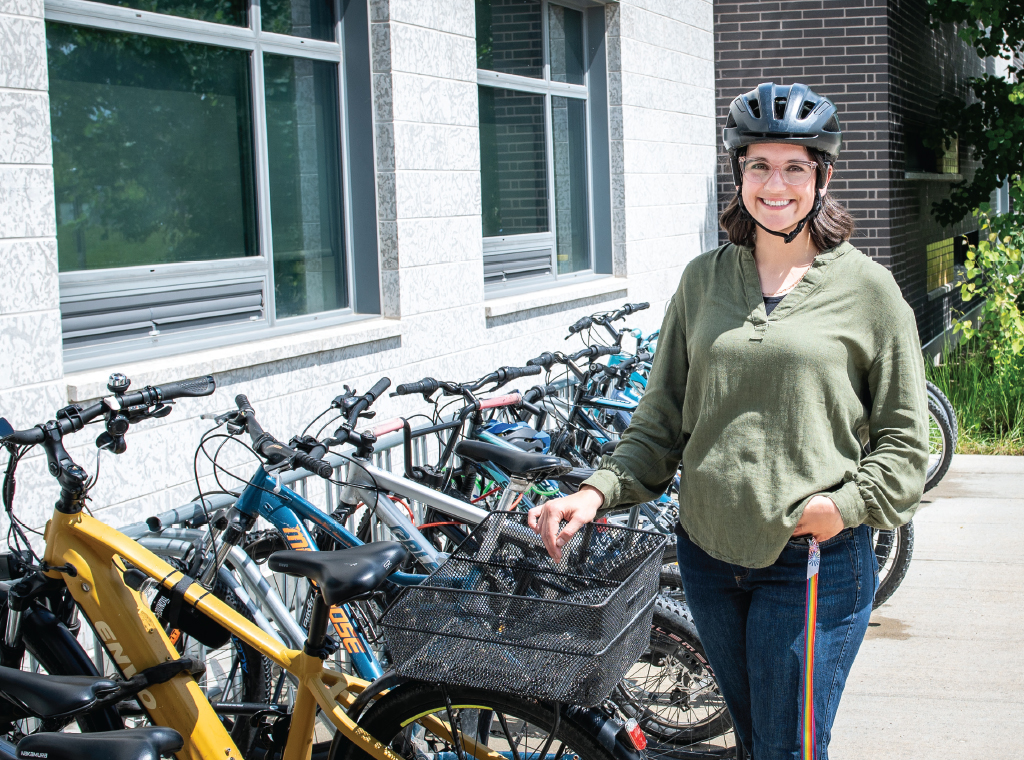
Grade 2 teacher Amanda Lake launched the bike bus at Sage Creek School in 2024 and said the idea has quickly caught on, with about 50 students participating in the latest rides. Lake attributes extensive outreach to families and staff volunteers about clear safety expectations for helping the program grow.
Lake has also heard from parents about how grateful they are for the opportunity to take part, and she has quickly noticed the benefits in her classroom as well.
“I think the biggest positive impact is how well regulated the kids are when they come to school,” Lake said. “They’ve had some fresh air, they’ve had some sunshine, they’ve had some movement, and so they’re really excited to start the day.”
The bike bus has also given many children their first chance to cycle to school while creating opportunities for students from different grade levels to get to know one another.
Weather has not discouraged attendance. Lake recalled one ride in early May that took place in snowy conditions.
“It was snowing during our first bike bus in early May, and we still had 30 kids come out and they were cycling their little hearts out,” she said. “They’re learning that there’s no such thing as bad weather, and that they can do things that they set their mind to.”
Lake hopes to expand the bike bus this school year and has already seen a positive impact beyond the school.
“Lots of community members are gawking out their window at us and they’re waving. We see lots of people smiling. We ring our bells. We wave hello, we say good morning,” she said. “I hope that it encourages more people to bike year-round and get out into our communities.”
Starting a bike bus requires more than just choosing a neighbourhood route. Organizers recommend forming a committee of school staff and parents, working with administrators, and recruiting volunteers to lead rides. Schools are also encouraged to test routes in advance, set up safety protocols, communicate expectations with families and provide ride marshal training before the first outing.
Lake will be leading a bike bus workshop during the Environmental and Climate Action Education Network of Manitoba (ECAEN-MB) conference on MTS PD Day, Oct. 23. The newly formed Special Area Group of Educators (SAGE) shares practical and solutions-based approaches to environmental and climate action education. The morning session will focus on planning and launching a bike bus, followed by bike marshal training in the afternoon.
École Provencher teacher-librarian Suzanne Simpson helped launch her school’s bike bus (vélobus) four years ago, making it the longest running in the province. She said that it’s been great to see the positive impact it has on the school and students, and the idea is gaining momentum across the city.
“We now have seven different schools in Winnipeg that are running bike buses, and we’re really happy to share all the resources we’ve developed along the way,” Simpson said.
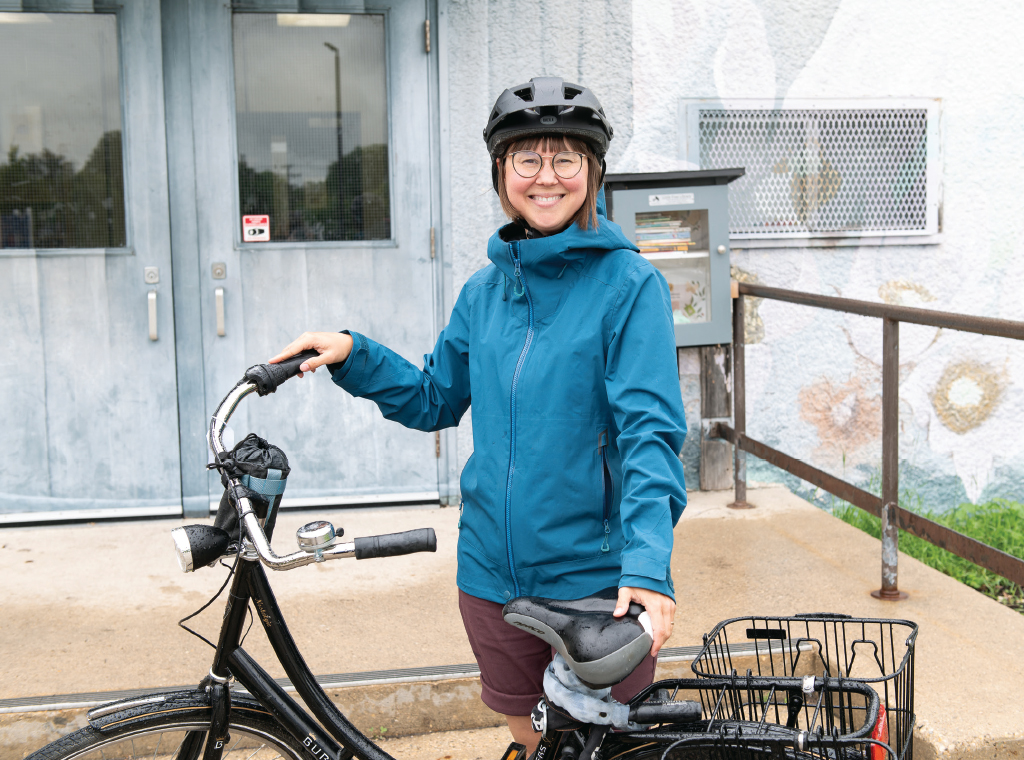
École Provencher teacher-librarian Suzanne Simpson helped launch her school’s bike bus (vélobus) four years ago, making it the longest running in the province.
The bike bus at École Provencher also stops at École Henri-Bergeron, and Simpson said the weekly rides have become about more than just transportation.
“The kiddos call it the party bus at our school, which I love because it really is a party vibe,” she said, adding the bus is accompanied by loud music, both for the vibes and for alerting drivers. “It’s a lovely way to build community, to get some physical exercise built into your day, and to gain confidence as a cyclist on the road.”
Parents have also embraced the initiative.
“The bike bus has been such a good experience. It really gives us a sense of community. It’s growing every year. It’s so much fun,” said parent Shannon Jackson, who has volunteered with the program for about three years. “It’s a great positive way to start the day, and it’s nice to see some of the younger kids develop their confidence on their bikes as well and learn road safety.”
Simpson believes the growing popularity of bike buses demonstrates that families want more opportunities for active transportation, particularly where cycling infrastructure makes them feel safe.
“It’s a bit of proof of concept. It means that people want to be choosing active transportation, and when given the opportunity, they are making that choice.”
Explore bike bus and safety resources: