
Keeping Indigenous Languages Alive
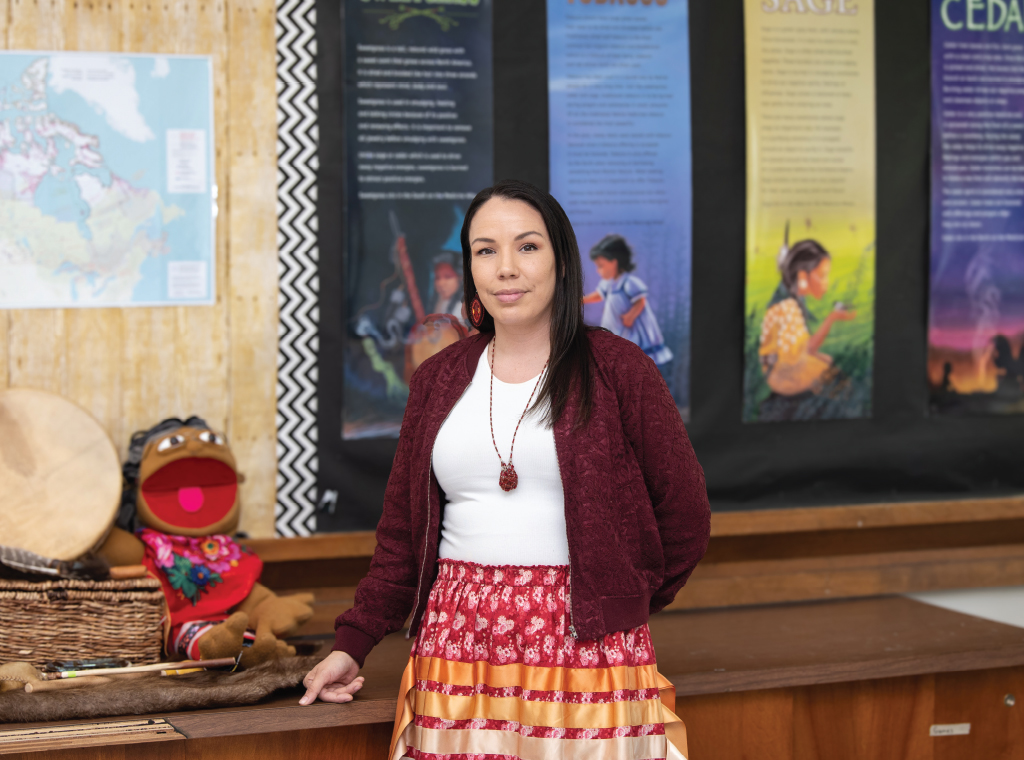
Every lesson is about more than language. For Rose Bird and Jennifer Alcock, teaching Indigenous languages means strengthening identity, fostering healing and creating opportunities for future generations to reconnect with cultures and languages colonial policies attempted to erase.
Bird, an Indigenous language teacher at Nelson McIntyre Collegiate, and Alcock, a Cree Language and Indigenous Studies and Treaties teacher at R.D. Parker Collegiate in Thompson, are committed to making Indigenous languages an active part of students’ daily lives.
“Revitalizing our languages is not just a school year,” added Alcock. “It is every day.”
A member of Tataskweyak Cree Nation, she has spent 27 years teaching and remains very involved in language revitalization efforts in Manitoba. Raised to be proud of her Swampy Cree culture, she credits her cultural teachings for giving her confidence to move forward in her life and eventually become a teacher.
“I have always enjoyed learning and becoming a teacher gave me access to instill the love of learning to my students.”
Bird’s educational journey was not a straightforward one. Growing up she faced many challenges, including foster care, poverty, family trauma, and involvement with the justice system. She left high school before graduation because at that time, school did not feel like a place where she belonged.
“Looking back now, I often wonder how different my experiences might have been if there had been more Indigenous educators, more culturally affirming spaces, and more opportunities to see my identity reflected in what I was learning.”
She later returned to school to complete her education and said those experiences shaped the educator she has become. “Today I have the privilege of being the kind of educator I needed growing up.”
Beyond teaching Anishinaabemowin (Ojibwe language), she works to build relationships with students and families while creating a space where young people feel connected, supported and valued.
“Language is much more than vocabulary. It carries our worldview, our humour, our history, our relationships and our ways of understanding the world.”
Bird incorporates resources outside of just textbooks, with storytelling, songs, drumming, games, beading, land-based learning and visits with elders and knowledge keepers. Students demonstrate learning through conversations, projects, presentations and cultural experiences, rather than solely through written tests.
“I want students to see that language is something we use to connect, with each other, with our communities and with the land,” she said.
Alcock uses a similar method in her teaching. Her classroom is filled with Cree language posters, syllabic charts, calendars and maps. She also uses game-based learning, songs and projects that help her students build confidence using Cree in everyday situations.
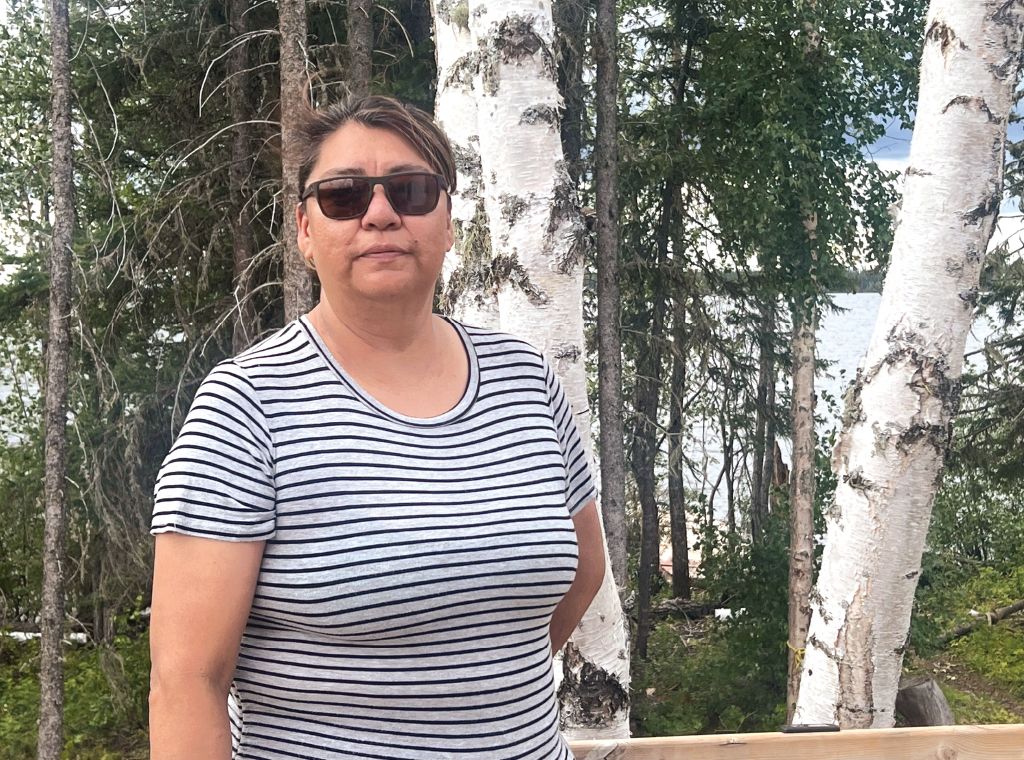
Jennifer Alcock, a Cree Language and Indigenous Studies and Treaties teacher at R.D. Parker Collegiate in Thompson, Manitoba, uses game-based learning, songs and projects that help her students build confidence using Cree in everyday situations. (Submitted photo)
“We as fluent speakers are missing conversations and the opportunity of passing on knowledge with our people of all ages. We are lonely and we need our languages to keep our spirits and identities alive and well,” Alcock said adding that humour is especially important. “We like to laugh. It is the best medicine. The healing of our people is also in the languages.”
Both teachers recognize that language revitalization benefits both Indigenous and non-Indigenous students.
“I find it essential for students to be knowledgeable in their culture, and also for non-Indigenous students to be knowledgeable of our culture to break the stereotypes and ease racism,” said Alcock.
Bird encourages teachers to not allow uncertainty to prevent them from taking meaningful steps in incorporating Indigenous languages in their classroom.
“You don’t need to be fluent to make a meaningful difference,” she said. “Learn how to greet students in the local language. Learn the traditional place names where you live. Invite local language speakers, elders, or knowledge keepers into your classroom when appropriate.”
She is also open about reclaiming Anishinaabemowin herself after generations of language loss caused by colonization and residential schools.
“I don’t consider myself fluent,” said Bird. “My own language journey continues every day. If I waited until I felt I knew everything, I would never begin – and neither would many of my students.”
For Bird, reconciliation begins with action.
“Reconciliation is not about having all the answers. It is about having courage to begin, the humility to listen, and the commitment to keep learning.”
Alcock believes that Indigenous languages are essential to the future of education.
“It is the essence of healing and regaining strength and identity. It is also important that the school systems understand this critical need to promote and save our languages. It is a right not a privilege.”
Together, both teachers hope that students leave their classrooms with pride in who they are, respect for Indigenous cultures and an understanding that Indigenous languages do not only exist in the past.
“They are living languages that continue to evolve and deserve to be heard, spoken, and celebrated in classrooms today,” said Bird.
Explore Indigenous languages resources
- Teacher guides, language resources and lending library from the Manitoba First Nations Education Resource Centre Inc.
- Kindergarten to Grade 12 Aboriginal Languages and Cultures Manitoba Curriculum Framework of Outcomes
- Office of the Commissioner of Indigenous Languages resource library & video: Rhythms of the Land | A Celebration of Indigenous Language, Music, and Storytelling
- Indigenous Education The National Centre for Collaboration resources
- First Nations, Inuit and Métis Nation language resources