
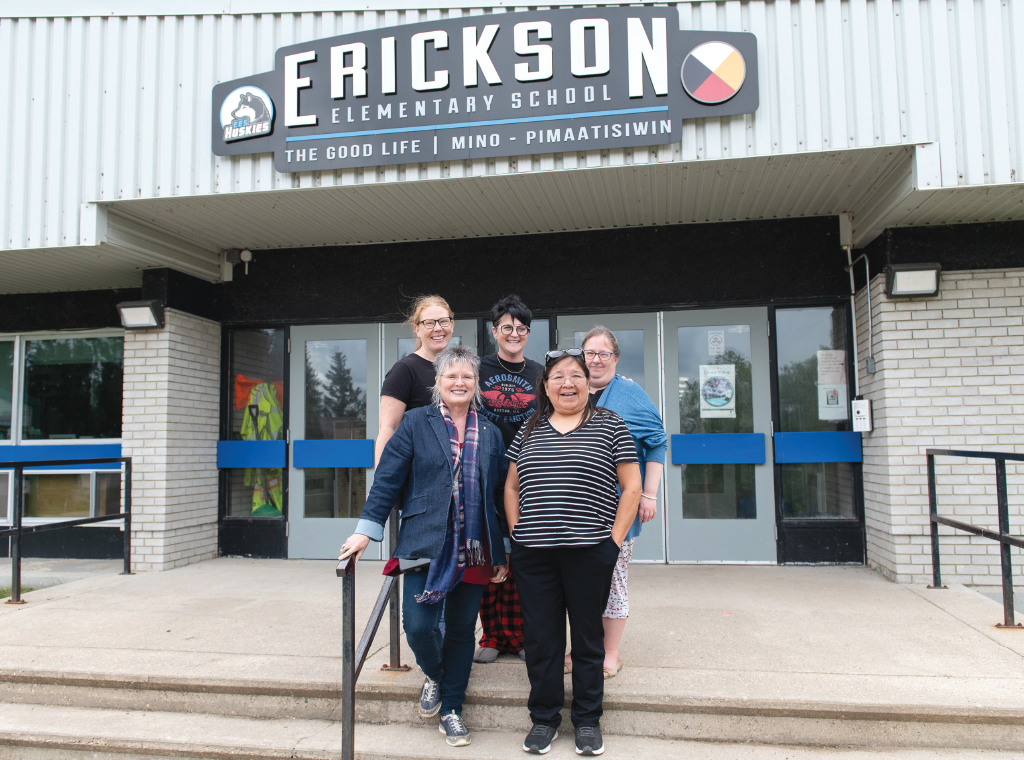
Walking the Path to Reconciliation at Erickson Elementary
At Erickson Elementary School, the path to reconciliation is walked every day. From classroom learning to school traditions, educators have built a culture where truth, reconciliation and Indigenous perspectives are woven into the fabric of the school’s daily life.
Located on Treaty 2 and Treaty 4 lands, the school serves approximately 140 students from Erickson, Sandy Lake, Onanole, and Rolling River First Nation. About 62 per cent of the student population is Indigenous.
Principal Laurie Bachewich said the school’s approach to reconciliation has evolved over many years.
“Erickson has been on a long journey to reconciliation, as many schools have been,” Bachewich said. “We are always asking ourselves where we come from, how that impacts how we teach and lead our students, and what we need to learn more about.”
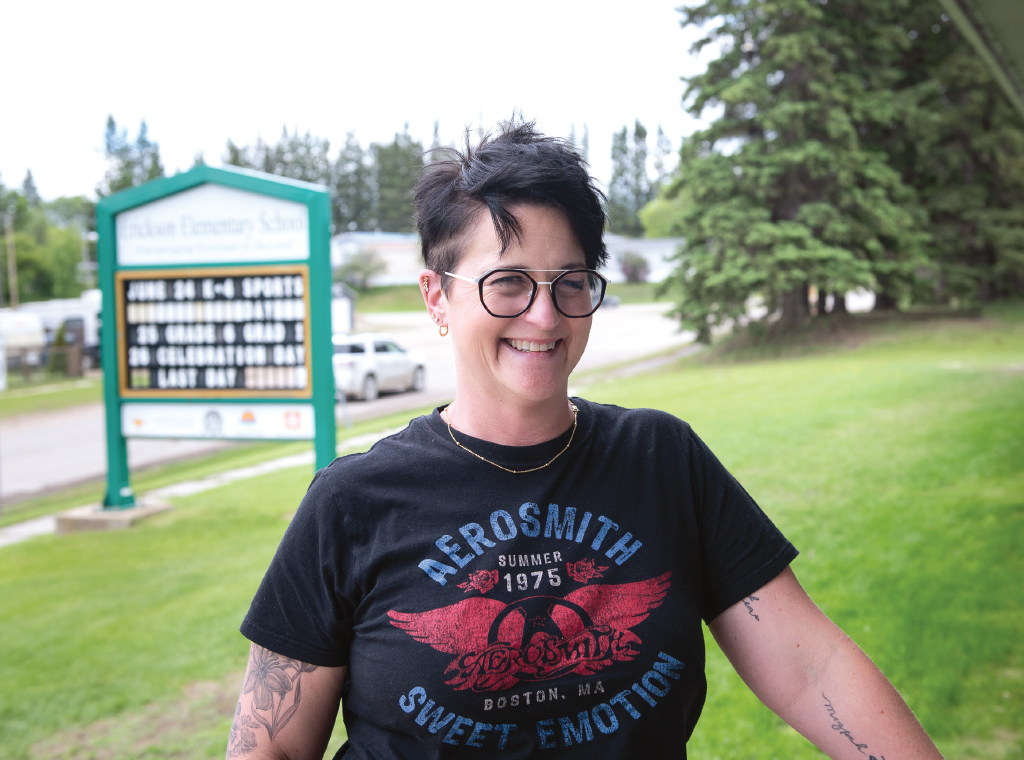
Erickson Elementary School Principal Laurie Bachewich said the school’s approach to reconciliation has evolved over many years.
Bachewich said staff members have worked alongside Elders and Knowledge Keepers to better understand Indigenous history, culture and perspectives, while reflecting on their own understanding of Canada’s history.
“We are learning every day about the truth of the past, the harms it has caused and how that has impacted where we are today,” she said.
That learning is reflected in the school’s vision of Mino-Pimatisiwin, an Indigenous traditional teaching. Mino-Pimatisiwin (The Good Life) refers to living a well-balanced life where all four components of a human are being addressed—emotional, physical, mental, and spiritual.
“As part of our Mino-Pimatisiwin vision, we want the good life for each and every child, staff member and family,” Bachewich said. “We want to show them what is possible, not what they must do. We walk alongside them as guides, honouring where they come from and how that creates a better world.”
The school’s commitment to reconciliation can be seen throughout the building with the Seven Sacred Teachings proudly displayed in hallways and classrooms, and regularly referenced in learning, conflict resolution, and conversations with families.
“You’ll find it in everything we do, from morning announcements all the way to the end of the day,” said Bachewich. “How we greet each other, how we build community, and how we engage with Sandy Lake, and Onanole, and Erickson, and of course Rolling River First Nation.”
Relationships with Rolling River First Nation are an important part of that work. Community members and Knowledge Keepers regularly visit the school to share teachings with the students and staff.
“We have a very strong and important relationship with Rolling River,” said Bachewich. “They support us in so many things that we do.”
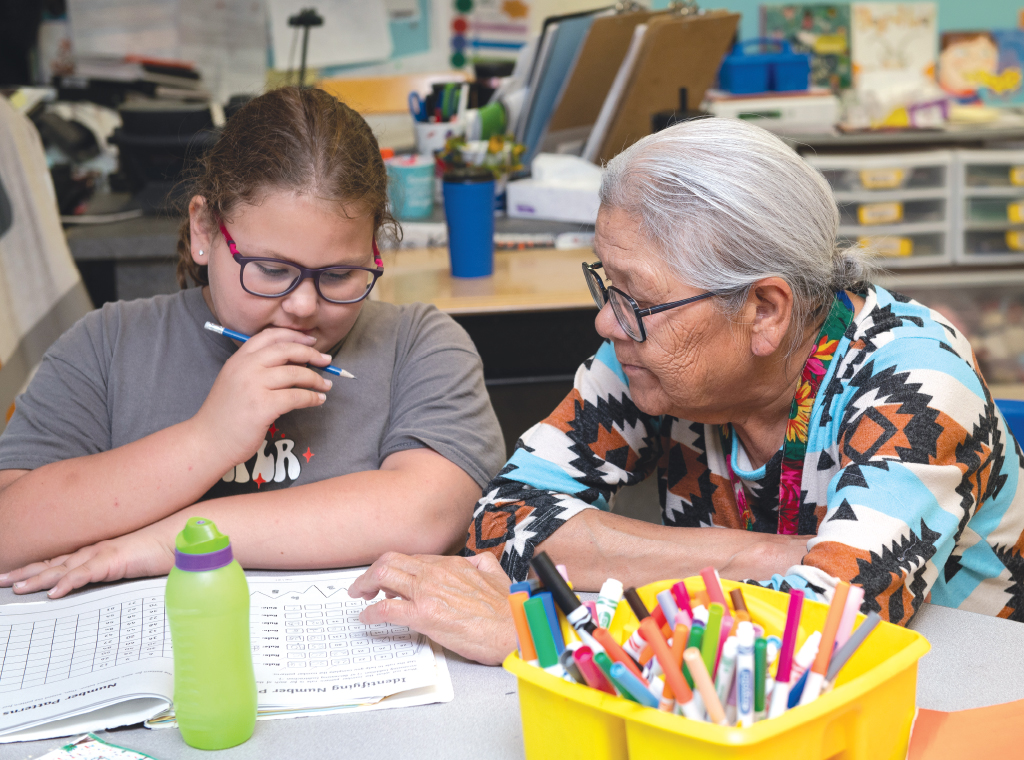
Darlene McKay – Black Thunderbird Woman, an educational assistant and Anishinaabe teacher, works with a student at Erickson Elementary School.
Connie Huntinghawk, the school’s secretary, said she has witnessed significant change during her more than 20 years at the school, particularly in how Indigenous students experience their learning environment.
“I’ve seen a lot of change over the years, and I think the biggest change is how our First Nation Indigenous students feel more comfortable here in our school,” she said.
As a former student of the school, Huntinghawk recalls struggling to find a sense of belonging.
“I found it difficult being an Indigenous student and I didn’t know how or where I belonged,” she said. “Today you see our students from Rolling River very much involved, very much included, and I just love the fact that our students here at the school know each other, where they come from, and they accept everyone. That just makes my heart happy.”
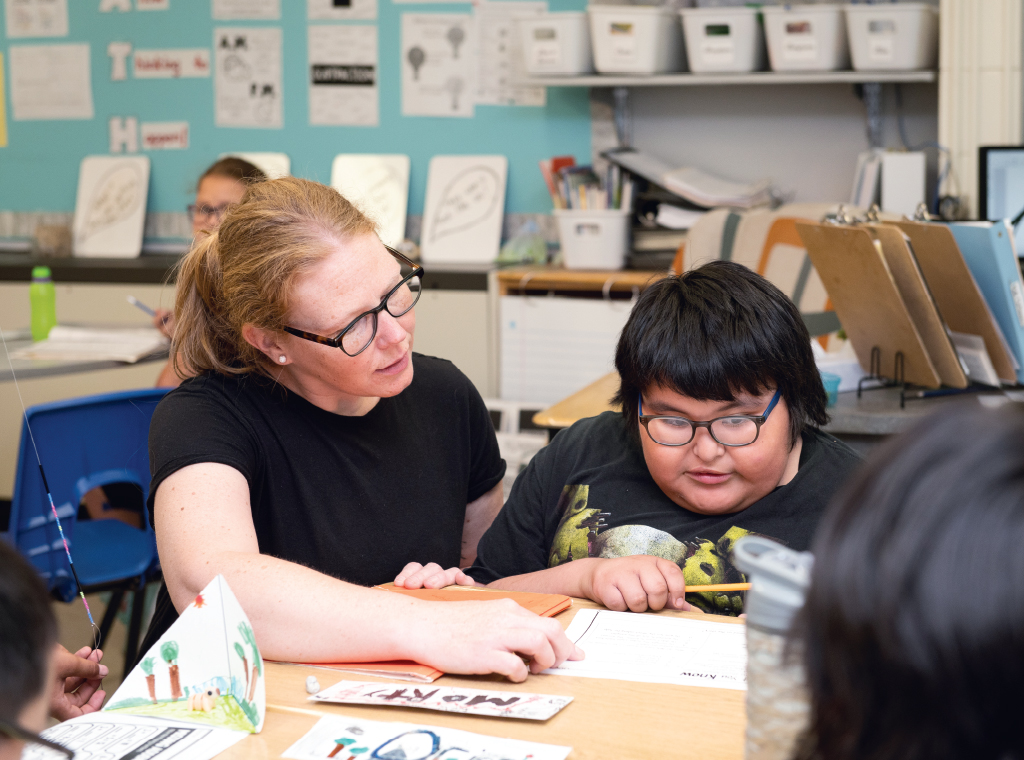
Grade 3-4 teacher, Jennifer Kelly works alongside a student at Erickson Elementary School.
Grade 3-4 teacher, Jennifer Kelly says reconciliation at the school begins with ensuring every child feels respected and heard.
“On a typical day in my classroom, truth and reconciliation looks like honouring each student, their background, their culture, where they come from, and honouring their voice, and treating each student as an individual,” Kelly said.
Each morning her students gather in a circle to share ideas and experiences. Discussions can include traditions, ceremonies, and celebrations from both Indigenous and non-Indigenous families. She encourages teachers who may be uncertain about Indigenous perspectives to approach the work with curiosity.
“Don’t be scared to ask questions,” she said. “Questions and curiosity lead to learning and that’s what we tell our students.”
Grade 1 teacher, Gayla Meredith recently worked with her students on a book project centered around the Seven Sacred Teachings. Knowledge Keeper Bonnie McKay from Rolling River First Nation visited the class every week and helped students explore the teachings through hands-on activities and discussions.
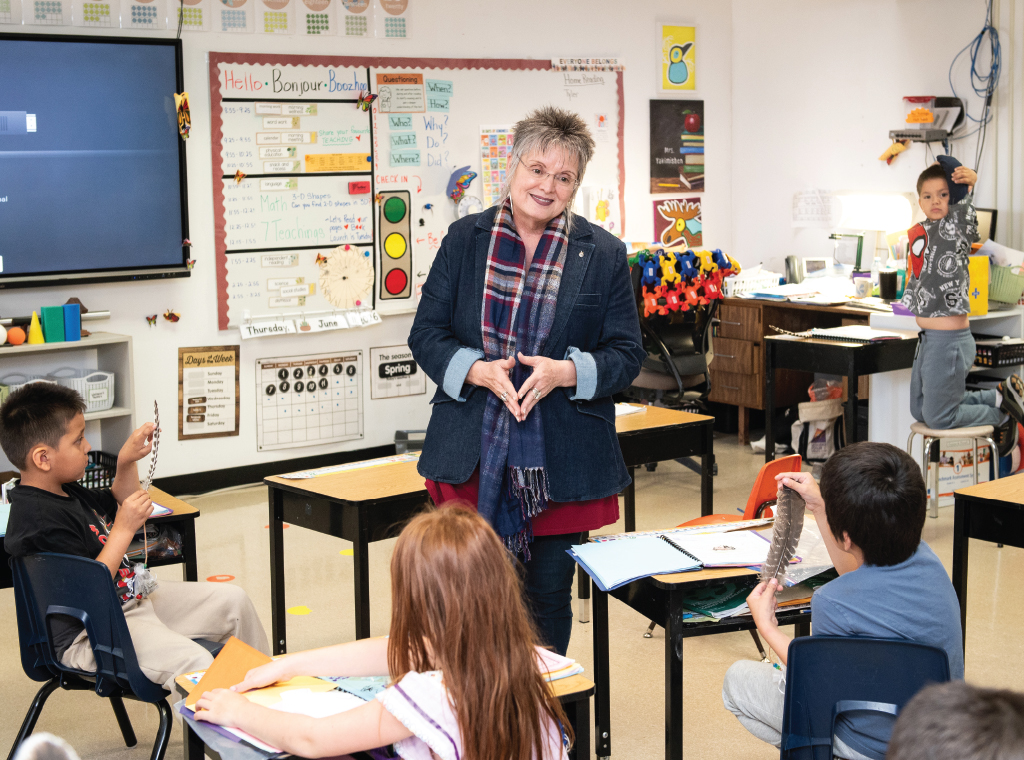
Grade 1 teacher, Gayla Meredith recently worked with her students on a book project centered around the Seven Sacred Teachings.
“I’m very excited to see the close relationship we have with the First Nations community and the support and the willingness to come and be part of class activities, and share wisdom and knowledge,” she said. “Starting with relationship building is key when we’re learning about one another and learning from one another, and I think that sharing is so important.”
Grade 3-4 teacher Zoe Bettess said discussing truth and reconciliation throughout the year helps students connect residential school history to larger discussions about justice and human rights.
“Talking about truth and reconciliation throughout the year has a good impact on the kids,” said Bettess. “It gives them a chance to understand what the past was like.”
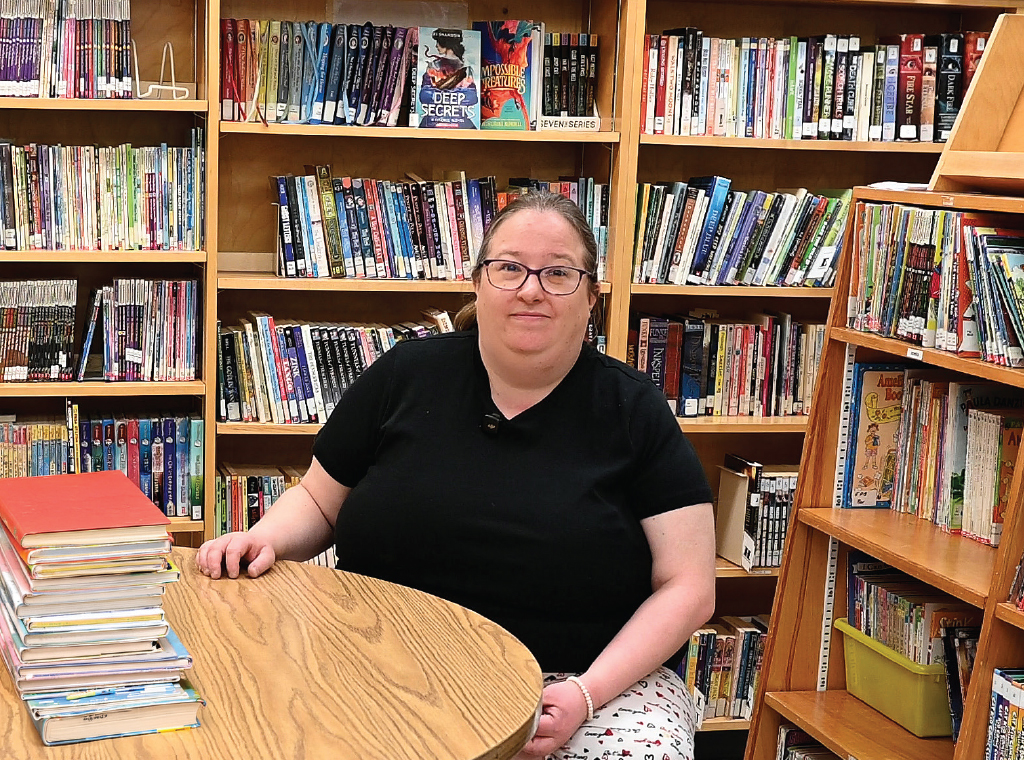
Grade 3-4 teacher Zoe Bettess says discussing truth and reconciliation throughout the year helps students connect residential school history to larger discussions about justice and human rights.
Her students have worked on their own version of the Witness Blanket, originally created by Indigenous artist Carey Newman, which explores residential school history and awareness surrounding missing and murdered Indigenous women and girls. She said the Seven Sacred Teachings is a daily reference point in her class.
“One of the things that’s featured as part of my daily routine in my classroom is when we’re doing any kind of subject, we sometimes will stop and say, ‘let’s think about the Seven Teachings and how that connects to that,’” Bettess said.
She recently saw a younger student applying one of those teachings during a disagreement on the playground, when the child reminded a classmate that truth is one of the Seven Sacred Teachings.
For Bachewich, it is moments like this that demonstrate how reconciliation has become integrated into daily life at school. But still, work remains.
“As non-Indigenous educators and citizens, it’s our responsibility to learn and walk alongside one another,” she said. “We’re all in different places on that journey and that is OK. Our school works hard at this and I am proud of this team of people.
“We still have a way to go – but we are moving forward and that’s what matters.”
The Manitoba Teachers’ Society encourages educators to explore the resources below and continue learning together:
- Learn, Honour and Advance Truth and Reconciliation Toolkit for Educators
- National Day for Truth & Reconciliation Lesson Plans
- Resistance on the Giimooch: The Life Story of Mary Courchene
- Secret Path Lesson Plans
- Education Resources from the National Centre for Truth and Reconciliation
- Witness Blanket Teacher Guide